Walking method7 min read
Chair Walking: How to Get Started
Chair walking brings the rhythm of walking to a seated workout: marching, heel and toe taps and gentle reaches. How to set up safely, six moves step by step, and a 10-minute routine.
The short answer
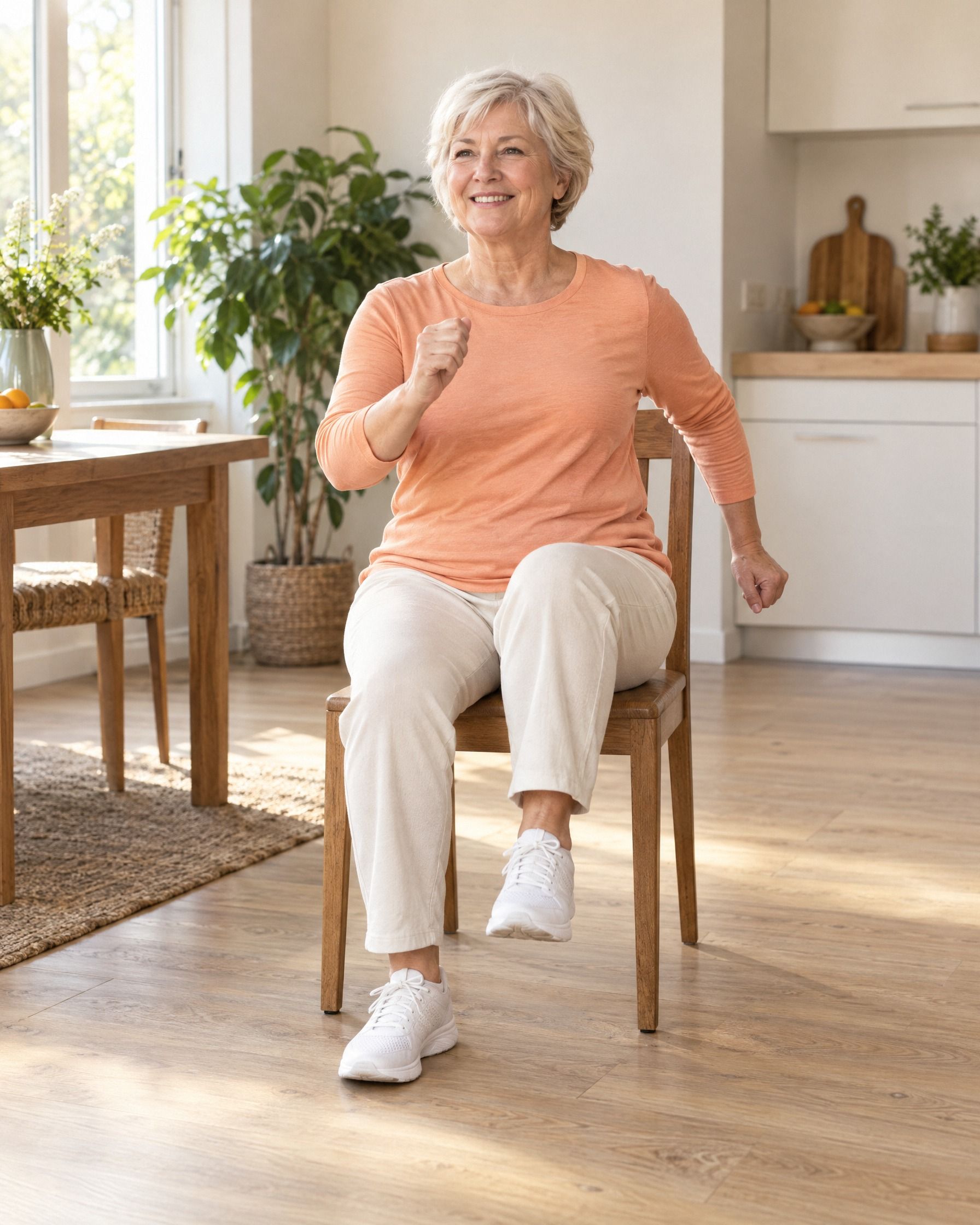
Chair walking is a seated routine that mimics walking: sit tall near the front of a sturdy chair without wheels, feet flat, and march your knees up and down, adding arm swings, heel and toe taps and gentle reaches. Start with 5 to 10 minutes, and do it at least twice a week, building up gradually.1
What is chair walking?
Chair walking (also called seated walking) uses the movements of walking, lifting the knees, swinging the arms and moving the feet, while you stay seated. It raises your heart rate gently, keeps your hips, knees and ankles moving, and works the leg and arm muscles, without putting weight through your joints or testing your balance.
Seated exercise has been studied mostly in older adults. A review of 25 studies found that chair-based exercise improved measures of strength, such as grip strength and how many times people could stand up from a chair in 30 seconds, though the size of the effect varied a lot between studies.2 The evidence is about strength and function, not weight.
Who it’s for
- People who find standing or walking for long tiring, painful or unsteady.
- Anyone returning to activity after a long break, an illness or an injury, once their care team agrees.
- Anyone who sits for long stretches and wants to break that up: guidelines encourage replacing sitting time with movement of any kind.5,4
- Low-energy days, when a walk outside feels like too much.
Set up your chair
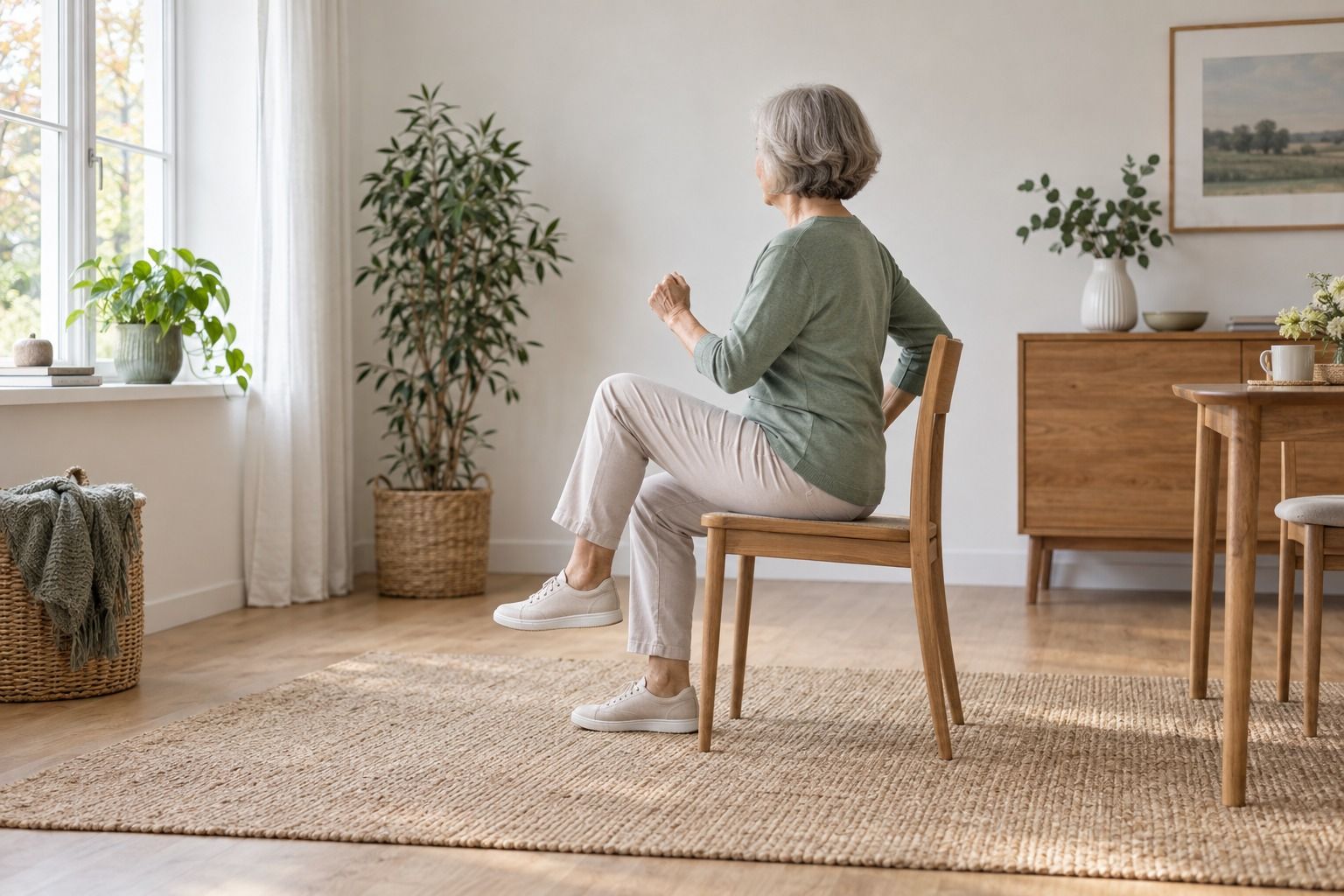
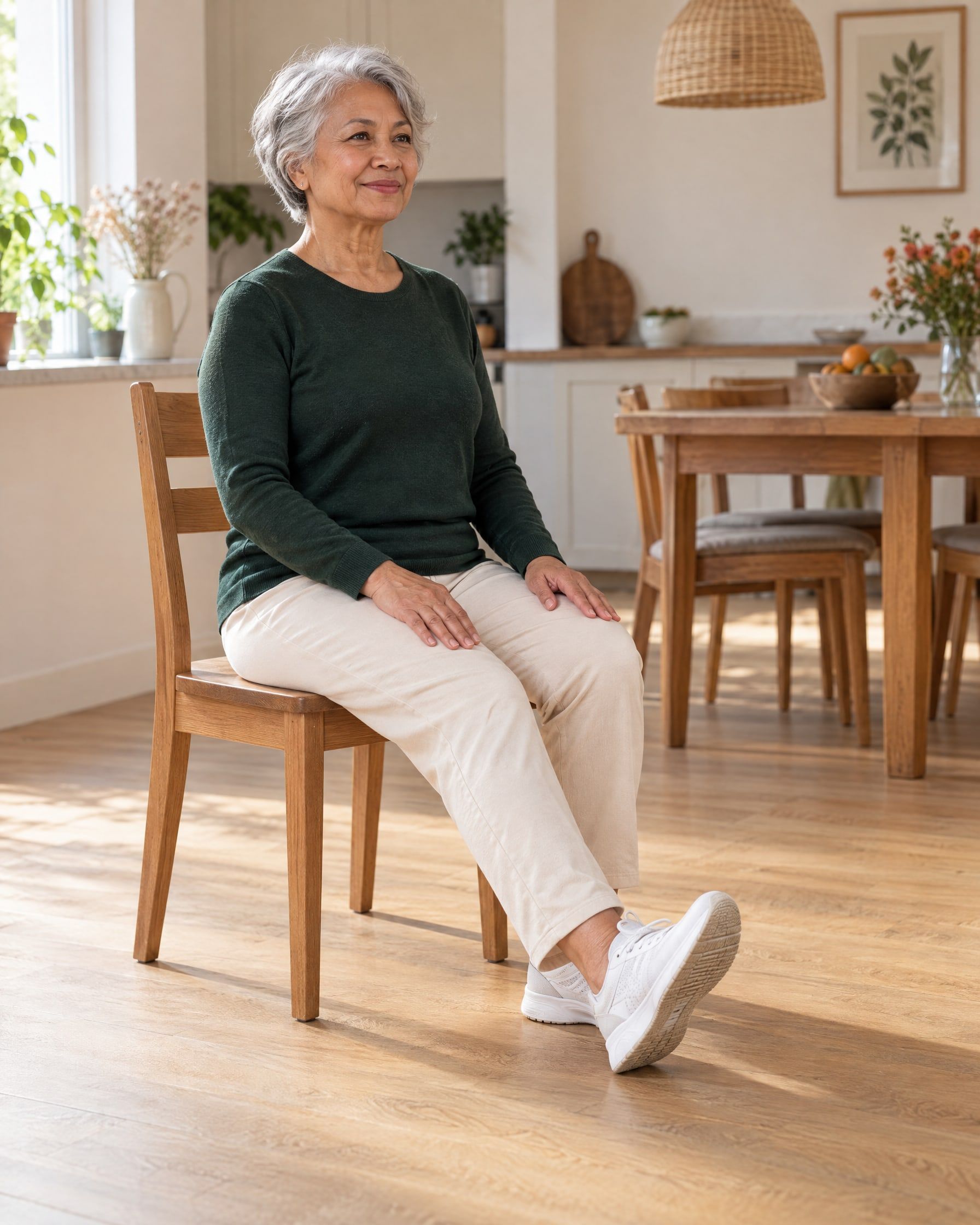
- A solid, stable chair without wheels, ideally without arms so your elbows can swing.1 A dining or kitchen chair is ideal.
- On a non-slip floor, with the back against a wall if it might slide.
- Feet flat on the floor, hip-width apart, knees bent at about a right angle.1
- Sit near the front of the seat with your back upright and not leaning on the backrest.
- Comfortable clothes and shoes, water nearby, and your phone or timer where you can see it.
Six seated moves
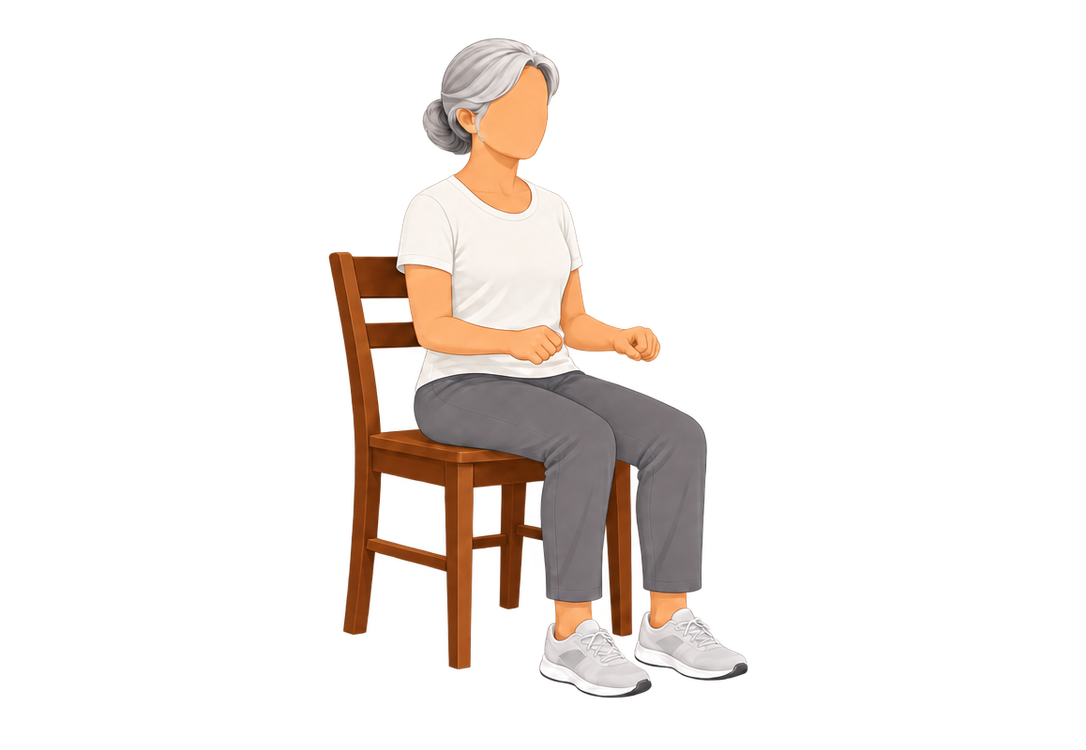
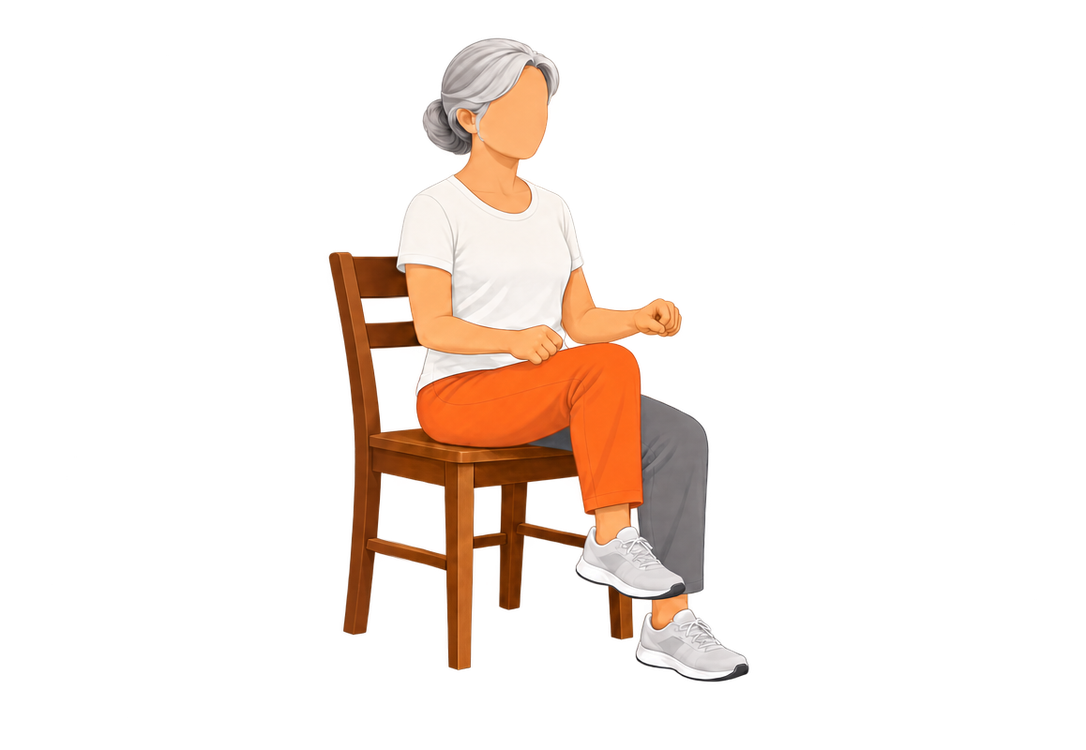
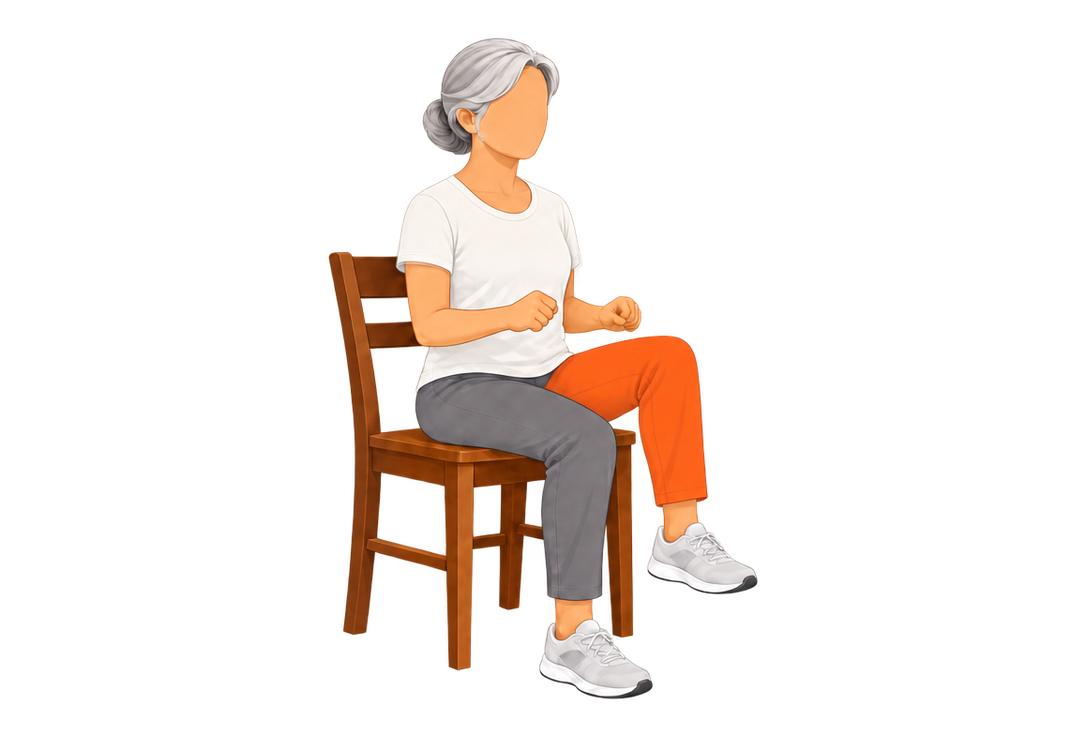
Slow seated march
Sit tall near the front of your chair. Lift one knee a little, then the other, at an easy pace. This is your warm-up.
Easier: lift your heels only and keep your toes on the floor.
Seated march
Sit tall with your feet hip-width apart. March your knees up and down and keep a steady rhythm.
Easier: make the lifts smaller and slower.
Seated march with arms
Keep marching and swing your arms as if you were walking, opposite arm to knee.
Easier: keep your hands on your thighs and just march.
Heel and toe taps
Tap one heel forward on the floor, bring it back and tap your toes, then swap feet.
Easier: tap the heel only, one foot at a time.
Step out and reach
Step one foot out to the side and reach the opposite arm up and across. Return and swap sides.
Easier: step out without the reach, or reach without the step.
Seated stretch
Circle each ankle slowly, reach both arms up and breathe out, and let your shoulders relax.
Easier: just breathe slowly and roll your shoulders.
A gentle 10-minute routine
10 minutes in a chair · 10 minutes
- Easy
- Steady
- Brisk
A slow start, a livelier middle and a calm finish. Diagram by Mova.
| Minutes | Move | How it should feel |
|---|---|---|
| 0–2 | Slow seated march | Easy, loosening up |
| 2–4 | Seated march | Steady rhythm, breathing a little quicker |
| 4–6 | Heel and toe taps | Steady |
| 6–8 | Seated march with arms | Livelier: you can talk, but not sing |
| 8–9 | Step out and reach | Steady, controlled |
| 9–10 | Seated stretch | Easy, breathing slowly |
Beginning slowly and finishing calmly lets your heart rate rise and settle gradually.7 Rest whenever you need to; there’s no need to keep going without a pause.
Building up
- Start with two or three sessions a week and add more as you feel ready.1
- Add time before effort: go from 10 to 15 minutes, then to 20, before making moves livelier.
- Make the middle livelier: lift your knees higher and swing your arms more, for 2 minutes at a time, with easier marching in between.
- When you feel steady, try supported standing moves holding the back of the chair (see indoor walking). Any increase in how much you move is good for you.6
Safety
Stay seated if you feel unsteady. Activity like this shouldn’t make you dizzy or cause chest pain or pressure, or a feeling of sickness.3 If you have a health condition, have been inactive for a long time, or are unsure whether exercise is right for you, check with your doctor first.1,4
Sources
- Sitting exercises. NHS.
- The effect of chair-based exercise on physical function in older adults: a systematic review and meta-analysis. Klempel N et al., International Journal of Environmental Research and Public Health, 2021.
- Three Types of Exercise Can Improve Your Health and Physical Ability. US National Institute on Aging.
- Physical activity guidelines for older adults. NHS.
- World Health Organization 2020 guidelines on physical activity and sedentary behaviour. Bull FC et al., British Journal of Sports Medicine, 2020.
- Staying safe. Moving Medicine, Faculty of Sport and Exercise Medicine UK.
- Warm Up, Cool Down. American Heart Association.