Walking method8 min read
Outdoor Walking for Beginners: Routes, Pace and Staying Safe
Everything you need for your first walks outside: how to pick a route you’ll actually use, how fast to go, what to wear, and how to stay safe in traffic, heat, cold and the dark.
The short answer
Start with a 10 to 15 minute loop close to home on paths or pavements you know. Walk the first few minutes easily, then at a pace where you can talk but not sing. Wear comfortable, supportive shoes and something bright if it’s getting dark. Walk three times in your first week and add a few minutes at a time.1,2
Choose your first route
The best route is the one you’ll walk again. For the first few weeks, look for:
- A loop or an out-and-back that starts at your door. No travel time means fewer reasons not to go. On an out-and-back route, turn around at half your planned time.
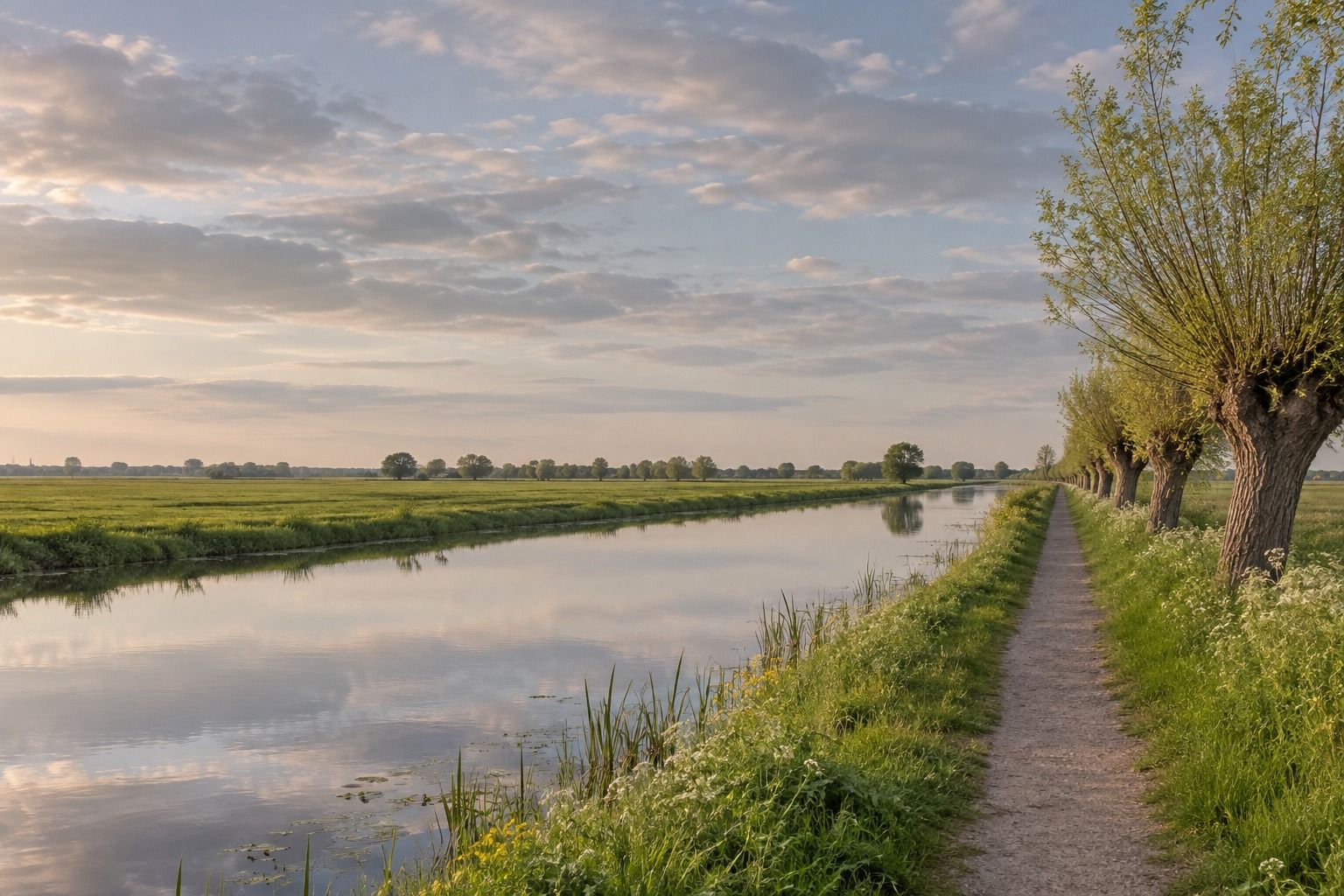
- Pavements or paths, with few busy roads to cross. Parks, canal towpaths and quiet residential streets work well.
- Mostly flat ground. Save hills for when you want a harder walk.
- Good lighting if you’ll walk early or late, and places to stop: a bench, a café, somewhere to shelter.
- A shorter option. A route you can cut in half on a busy or tired day keeps the habit going.
Try your route once at an easy pace to see how long it takes. Then you know exactly how much walking it gives you.
Find a comfortable pace
Begin every walk with a few minutes at an easy pace and finish the same way; it lets your heart rate rise and settle gradually.4 In between, aim for brisk walking:
- The talk test: you can hold a conversation, but you couldn’t sing.1,2
- The speed: about 3 miles (5 km) an hour for most adults.1 You don’t need to measure it.
- The rhythm: around 100 steps a minute is a common marker of moderate-intensity walking.3
If you’re just starting, easy walking is fine too. Brisk walking can come in later weeks.
A first outdoor walk · 15 minutes
- Easy
- Steady
3 minutes easy, 9 minutes at a comfortable, steady pace, and 3 minutes easy to finish. Diagram by Mova.
How to walk well
- Stand tall and look ahead, about 10 to 20 metres in front of you, rather than at your feet.
- Relax your shoulders and let your arms swing naturally. Bending your elbows helps when you walk faster.
- Roll through your feet from heel to toe.
- To go faster, take quicker steps rather than longer ones. Over-long strides can feel jarring.
What to wear and bring
- Shoes: comfortable, supportive shoes with good grip.5 Walking or running shoes are ideal, but any comfortable trainers will do to start.
- Layers: you warm up quickly, so start slightly cool, with a layer you can take off.
- Something bright in daylight and reflective in the dark.6
- Your phone, for emergencies, and water on warm days or longer walks.
Your first week
| Day | Walk | Pace |
|---|---|---|
| Day 1 | 10 minutes: try your route | Easy |
| Day 2 | Rest, or a short walk to the shops | Rest |
| Day 3 | 15 minutes | Easy, a few steady minutes in the middle |
| Day 4 | Rest | Rest |
| Day 5 | 15 minutes | Easy, then Brisk for 5 minutes |
| Days 6–7 | Rest, or an easy walk with someone | Rest |
From there, add a few minutes to each walk every week. A brisk 10-minute walk every day already has health benefits, and guidelines suggest building toward 150 minutes of moderate activity a week, such as 30 minutes on five days.1,13 Our beginner walking plan takes you through four full weeks.
Traffic and walking in the dark
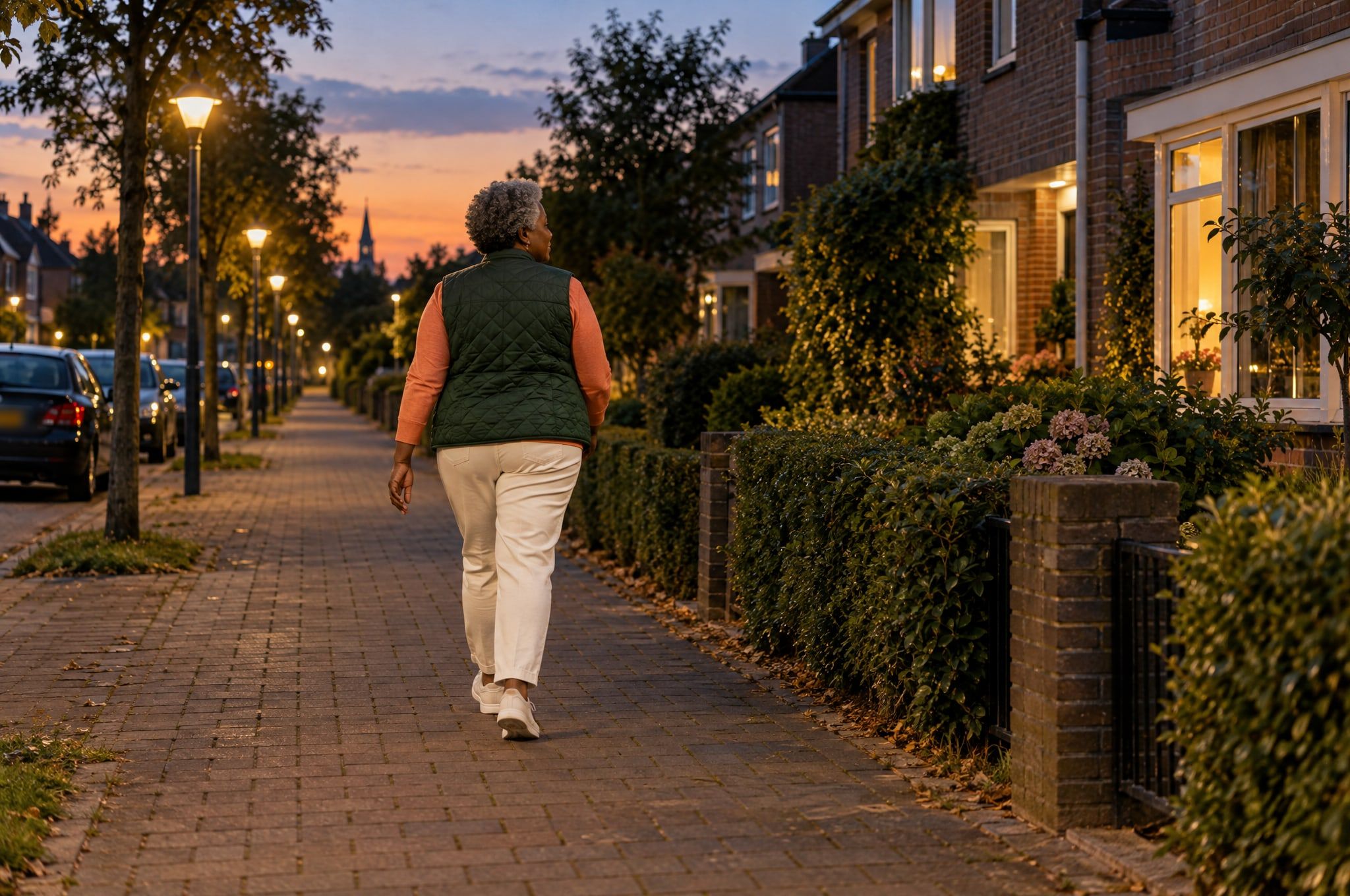
Pedestrians account for almost a quarter of road deaths worldwide,7 so a few habits are worth building from the start:6
- Use pavements and paths where you can. Where there are none, walk facing oncoming traffic, as far from it as you can.
- Prefer quieter, slower roads, and cross at crossings or junctions where drivers expect you.
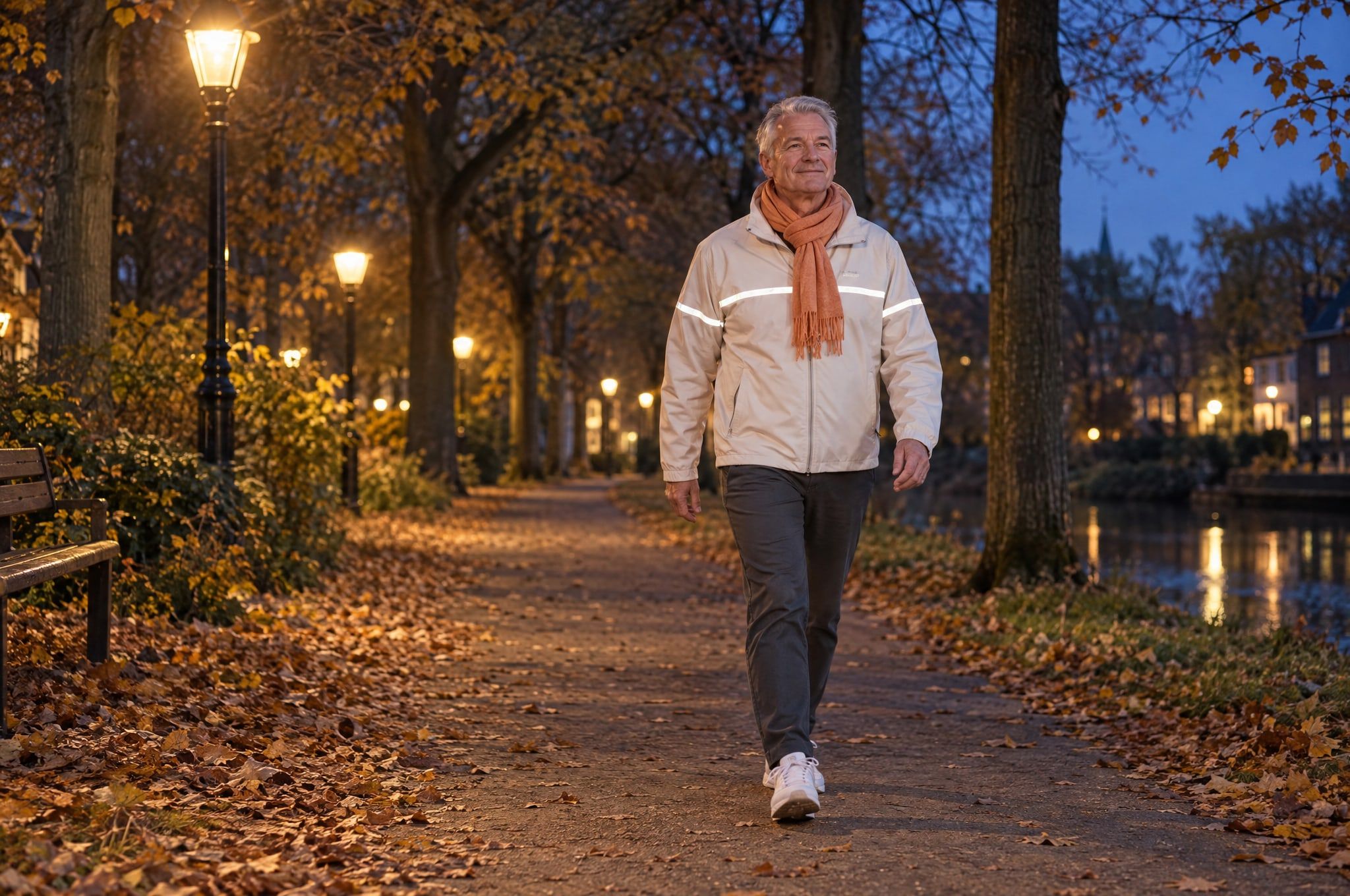
- Be visible: bright clothing by day, reflective clothing or a small light after dark.
- Keep your attention up near traffic: keep the volume low, or use one earbud, and look up from your phone when crossing.
Heat, cold and ice
Hot weather
- Walk early in the morning or in the evening, and stay out of the sun between 11am and 3pm when you can.10,9
- Wear light, loose clothing and sunscreen, slow your pace, and drink water.9
- Know the signs of heat exhaustion: headache, dizziness, feeling sick, heavy sweating, cramps and a fast pulse. Stop, move somewhere cool, and drink. If you don’t feel better within 30 minutes of cooling down, get urgent medical help.8
Cold, wet and icy weather
- Wear layers, a hat and gloves. Getting wet makes you lose heat faster, even when it isn’t freezing.11
- Cold weather puts extra strain on the heart, and walking on ice is a real fall risk.12 On icy days, walk indoors instead: see indoor walking.
Personal safety
- Tell someone your route and when you expect to be back, especially on longer or quieter walks.5
- Carry your phone, and stick to routes you know when it’s dark.
- Trust your instincts: turn back or change route if something doesn’t feel right.
Sources
- Walking for health. NHS.
- Measuring Physical Activity Intensity. US Centers for Disease Control and Prevention.
- Walking cadence (steps/min) and intensity in 21–40 year olds: CADENCE-adults. Tudor-Locke C et al., International Journal of Behavioral Nutrition and Physical Activity, 2019.
- Warm Up, Cool Down. American Heart Association.
- Walking: Trim your waistline, improve your health. Mayo Clinic.
- Making Walking and Rolling Safer. US Centers for Disease Control and Prevention.
- Despite notable progress, road safety remains urgent global issue. World Health Organization, 2023.
- Heat exhaustion and heatstroke. NHS.
- Protect yourself from the dangers of extreme heat. US Centers for Disease Control and Prevention.
- Sunscreen and sun safety. NHS.
- Preventing hypothermia. US Centers for Disease Control and Prevention.
- Stay safe during and after a winter storm. US Centers for Disease Control and Prevention.
- Adult Activity: An Overview. US Centers for Disease Control and Prevention.